Rudolfinerhaus Privatklinik GmbH
Billrothstraße 78
1190 Vienna
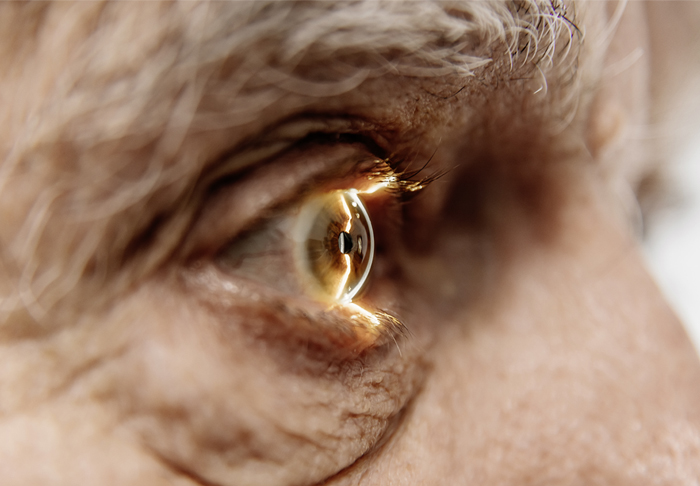
Age-related macular degeneration (AMD) affects the macula, the point of sharpest vision, and is one of the most common causes of severe visual impairment in old age. Typical symptoms include declining central visual acuity, distorted vision (crooked lines) and dark spots in the field of vision; peripheral vision remains intact.
There are two forms: dry AMD and wet AMD. Dry AMD progresses slowly, cannot be treated and does not lead to blindness, but must be monitored every 3–6 months as it can develop into the aggressive wet form. Wet AMD develops more quickly and requires prompt treatment. Changes are detected early by means of a retinal examination using a slit lamp and OCT images; retinal photographs can also be used as a supplement.
IVOM therapy (intravitreal drug administration) is available for wet AMD. It inhibits pathological vascular growth and leaks that cause vision deterioration. With timely, regular injections, the progression and deterioration of vision can be significantly slowed and visual acuity can often even be improved. Treatment usually begins with monthly injections, with the intervals between injections increasing later on depending on the individual progression of the disease. An average of eight injections are required in the first year. The treatment is carried out under sterile conditions with prior anaesthesia of the eye. After IVOM, you can go home, but you should not drive yourself at first.
IVOM is used not only for wet AMD, but also for diabetic macular oedema and macular oedema following vascular occlusion.