Rudolfinerhaus Privatklinik GmbH
Billrothstraße 78
1190 Vienna
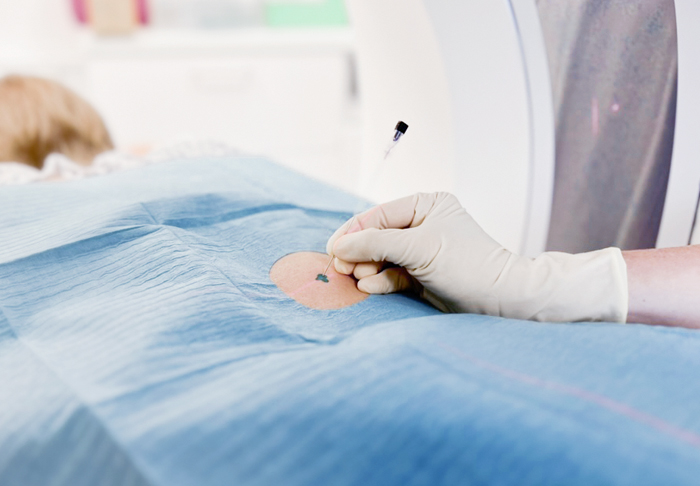
Interventional radiological pain therapy can provide rapid and targeted relief for therapy-resistant back pain. Under imaging control – for example, using CT or ultrasound – anti-inflammatory painkillers are injected precisely into the affected area. These minimally invasive procedures often work quickly and effectively and can, in many cases, make surgery unnecessary.
This method is particularly suitable for spinal disorders such as:
- Herniated discs (cervical, thoracic or lumbar spine)
- Facet joint arthrosis (wear and tear of the small vertebral joints)
- Spinal canal stenosis (narrowing of the spinal canal)
- Painful sacroiliac joints (SIJ)
- Painful muscle attachments or origins
If an MRI is not possible, a CT myelography can be performed to diagnose nerve structures in the spinal canal. This involves injecting contrast medium into the spinal canal to make nerve damage – such as herniated discs or spinal canal stenosis – more visible.
Radiofrequency ablation is a highly effective treatment for benign bone tumours (osteoid osteomas), whereby the interventional radiologist can remove the osteomas through targeted application of heat.
Vertebroplasty is another procedure used to treat vertebral fractures caused by osteoporosis or metastases in the vertebral body. A special bone cement is injected to stabilise the vertebral body, relieve pain and prevent further fractures.
We offer this service on an outpatient basis at our Department for Diagnostic Imaging together with affiliated doctors in interventional radiology. The treatment has to be paid by the patients themselves. If you are afraid of the treatment, we can offer you light sedation to calm you down or, if necessary, a general anaesthetic.